Choose your kitten’s veterinarian and schedule the first appointment within 14 days of pickup.
Your kitten’s environment
A comfortable place to rest.
You should introduce the other pets slowly to help your new kitten warm up.
Lots of love & affection!
Supplies you will need
Toys to play with (some will be provided).
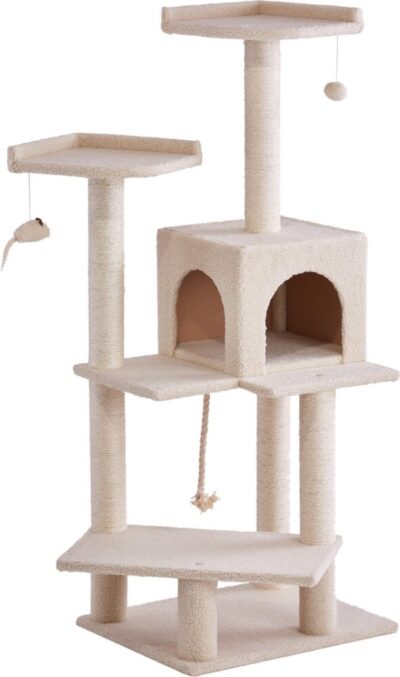
Our cats use cat tree scratching posts, similar to the image below. However, any scratching post should work—don’t feel the need to purchase anything this large.
Litter box
The general rule of thumb is one litter box per cat, per level of your home, plus one. Start with an uncovered litter box to help your kitten adjust to the new surroundings. We recommend adding “cat attract litter additive” to your litter boxes during the first few weeks to help them find their way around their new environment.
We will ensure your kitten is fully litter-box trained before going home.
A constant supply of dry cat food and fresh water should be left out for your kitten at all times throughout the day. In addition, we feed our kittens a 3 ounce can of wet food once or twice per day, depending on the appetite of the kitten.
Food and water bowls should be either stainless steel or ceramic. Although plastic bowls are common and popular, they can cause inflammation (“feline chin acne”) in cats.
We feed and recommend Purina Pro Plan kitten food. You can purchase the dry food here: https://www.chewy.com/purina-pro-plan-complete-essentials/dp/1972606 and the wet food here: https://www.chewy.com/purina-pro-plan-classic-chicken-grain/dp/174768. You can experiment with different flavors to give your kitten some variety.
Probiotics
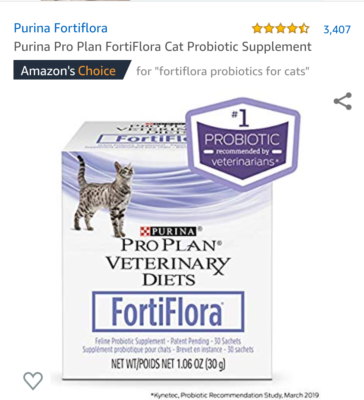
Probiotics should be provided to your kitten once per day for the first week or two that they come home in order to aid in the production of antibacterial substances, inhibit pathogenic bacteria and toxins, and regulate the immune response. In addition, probiotics should be on hand if your kitten has an upset stomach.